





Introduction: Why Every Call Matters More Than Ever
Have you ever called a company and been stuck waiting on hold for what felt like forever?
Most of us have — and that experience often defines how we feel about a brand.
Now imagine if every customer call were answered instantly, in natural human language, 24/7 — without hiring a night shift. That’s what an AI voice agent for customer support can do.
After working in AI and automation for over a decade, we have seen how even small and mid-sized businesses can use this technology to handle calls faster, improve customer satisfaction, and cut costs — all within weeks.
In this article, we will walk you through how voice agents work, why they matter, how to get started, and what to watch out for — plus a few personal insights from real deployments.
1. What Is an AI Voice Agent and Why Businesses Are Using Them
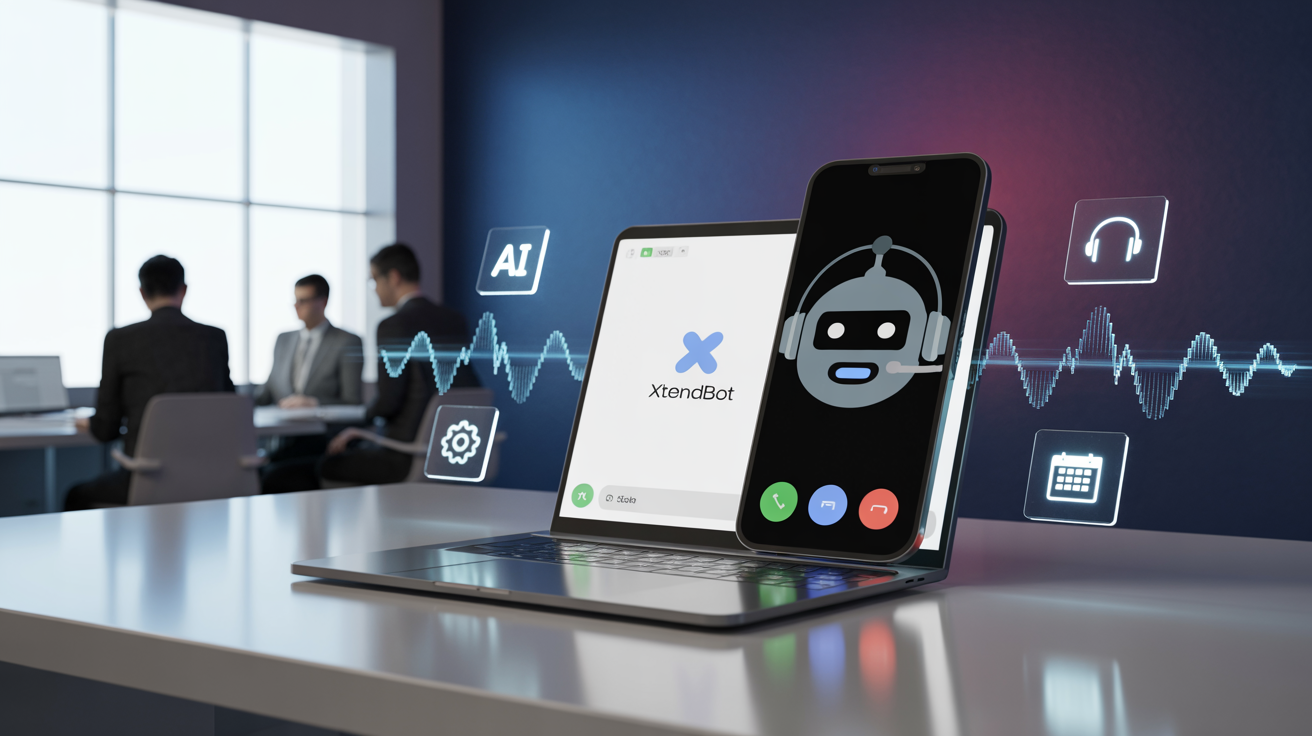
An AI voice agent for customer support is like a virtual receptionist that can answer phone calls, understand what the caller wants, and respond conversationally — just like a trained human agent.
The difference is, it’s available around the clock, never forgets a script, and scales instantly when call volumes spike.
Here’s what a modern voice agent can do:
- Answer incoming calls and greet customers in your brand’s voice.
- Understand natural language (“I want to reschedule my appointment”).
- Pull information from your CRM or scheduling system.
- Book appointments, share order status, or route calls to the right human agent.
A client of ours, a home improvement contractor, replaced their overflow call queue with a voice agent. Within a month, they reduced missed calls by 70% and saw a 40% rise in booked appointments — without hiring anyone new.
2. Why Now? The Business Case for Voice AI
Customer expectations have changed dramatically. People expect real-time answers, whether it’s 10 a.m. or 10 p.m.
Traditional call centers can’t always keep up — hiring is expensive, and staff turnover is high. That’s where voice AI for customer service becomes a game-changer.
Key benefits include:
- Instant response times: No more long hold queues.
- 24/7 availability: Customers can call anytime.
- Lower costs: Handle more calls with fewer human agents.
- Consistent service: Every customer gets the same quality of care.
And contrary to the stereotype, customers often appreciate talking to a voice assistant — as long as it’s fast, polite, and gets the job done.
3. How an AI Voice Agent Works (Without the Jargon)
Let’s strip the tech down to what really happens behind the scenes:
- The customer speaks. The system uses speech recognition to turn that into text.
- The agent interprets intent. Using natural language processing (NLP), it figures out what the caller wants — e.g., “cancel my order” or “book a consultation.”
- It takes action. The agent connects with your backend system (CRM, booking software, etc.) to complete the task.
- It responds naturally. Text-to-speech converts the response back into a lifelike voice.
Think of it like a super-efficient receptionist who listens, thinks, acts, and speaks — all in a few seconds.
4. Top Use-Cases Across Industries
Here are some of the most common (and high-ROI) ways companies use AI voice agents for customer support:
- Appointment scheduling: Salons, med-spas, and clinics use it to handle routine bookings.
- Order tracking & FAQs: E-commerce businesses automate status updates and shipping questions.
- Call overflow handling: Businesses redirect unanswered calls to the agent instead of voicemail.
- Lead qualification: Real estate, home improvement contractors, HVAC service companies, Roofing Repair companies, Insurance agencies use it to collect caller info and schedule follow-ups.
- After-hours support: Companies stay “open” even when the team is offline.
One small HVAC service repair company we worked with found that their voice agent handled 60% of calls end-to-end — freeing their front desk to focus on other customer service tasks.
5. Best Practices for a Successful Deployment
After helping several businesses implement voice AI, here are the lessons that consistently lead to success:
- Start with a single use-case. Don’t automate everything at once — start with one repeatable call type (like appointment booking).
- Train the system with real calls. Use transcripts from your call logs to teach the agent real-world phrasing.
- Always offer a human hand-off. Let customers say “talk to a person” and route them instantly. It builds trust.
- Keep the language natural. Avoid robotic phrasing. Add a friendly tone (“Hi! Thanks for calling Acme Spa — how can I help today?”).
- Monitor and refine. Review call analytics weekly. Improve responses where customers get stuck.
A voice agent isn’t “set it and forget it.” Like a new team member, it performs best with ongoing feedback.
6. Measuring ROI and Success
To prove real business value, track a few key metrics:
| Metric | What It Tells You |
|---|---|
| Containment Rate | % of calls fully handled by the AI without escalation |
| Average Handle Time | How fast calls are resolved |
| CSAT / Feedback | Customer satisfaction scores post-call |
| Cost per Call | Operational savings compared to human agents |
If you’re achieving 50% containment and halving your cost per call, that’s a solid win — and easily achievable for most mid-size teams.
7. What to Look for in a Voice Agent Solution
When comparing providers, consider:
- Ease of integration: Does it connect to your CRM, scheduling, or ticketing system?
- Voice quality: Natural, brand-aligned voices matter more than people realize.
- Omnichannel support: Bonus if it can also handle web chat or SMS.
- Analytics dashboard: You’ll want to track performance in real time.
- Security & compliance: Look for SOC 2 or HIPAA compliance if you’re in healthcare.
At Xtend.AI, we designed our voice and text agent to integrate quickly — so most clients can launch a pilot within 30 days and see measurable results in month one.
8. The Future: From Reactive to Proactive Voice Agents
The next generation of AI voice agents for customer support won’t just answer calls — they’ll initiate them.
Imagine an agent that calls customers to confirm appointments, check satisfaction, or offer renewals.
We’re also seeing rapid progress in:
- Emotion detection (tone analysis to sense frustration)
- Real-time translation for multilingual support
- Context continuity across voice and chat
Soon, customers won’t care if they’re talking to a human or an AI — as long as their issue is resolved quickly and kindly.
Conclusion: Ready to Try It?
Customer experience starts with how quickly you respond.
If you’re missing calls or spending too much on support staff, it might be time to see what a voice AI customer support solution can do.
You can start small — even a single use-case like booking or FAQs can make a real impact within weeks.
👉 Schedule a demo with Xtend.AI to see how your business can go live with an AI voice agent in just 30 days.